
Project Overview
Textile effluent treatment is typically managed with flocculation and aeration, which require heavy chemical use, electricity, and generate large sludge volumes. For dyeing and bleaching units in Perundurai, this leads to high operating costs and environmental concerns.
BEADS™ Technology Solution
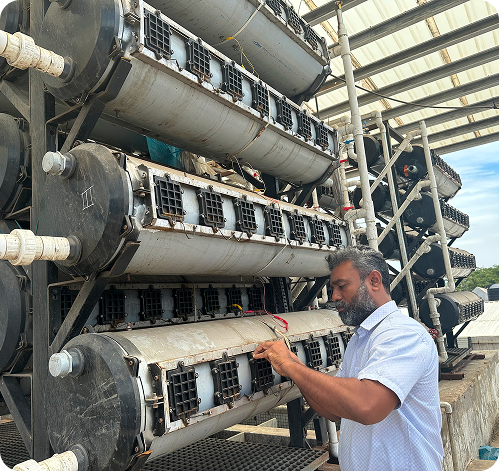
Bio-Electrochemical Anaerobic Digestor System (BEADS™) developed by JSP Enviro provides a sustainable alternative:
Recovers Energy
Anaerobic fuel cell-based process that treats wastewater while generating electricity or methane.
No Chemicals & Minimal Sludge.
No chemicals required for treatment. Upto 80% reduction in sludge.
Modular Design
No concrete structure required. Modules can be added as capacity increases.
Pilot Deployment Details
Site
SIPCOT, Perundurai, , Tamil Nadu
Capacity
50 m³/day
Operation Period
6 months
Operation Mode
Continuous and batch-fed with sludge seeding
Integration Process
- Effluent bypassed from equalization tank
- Treated in BEADS™ system
- Returned to ASP for final polishing
Performance Results
6-Month Operational Data & Extended Trials
6-Month Operational Data
COD Reduction
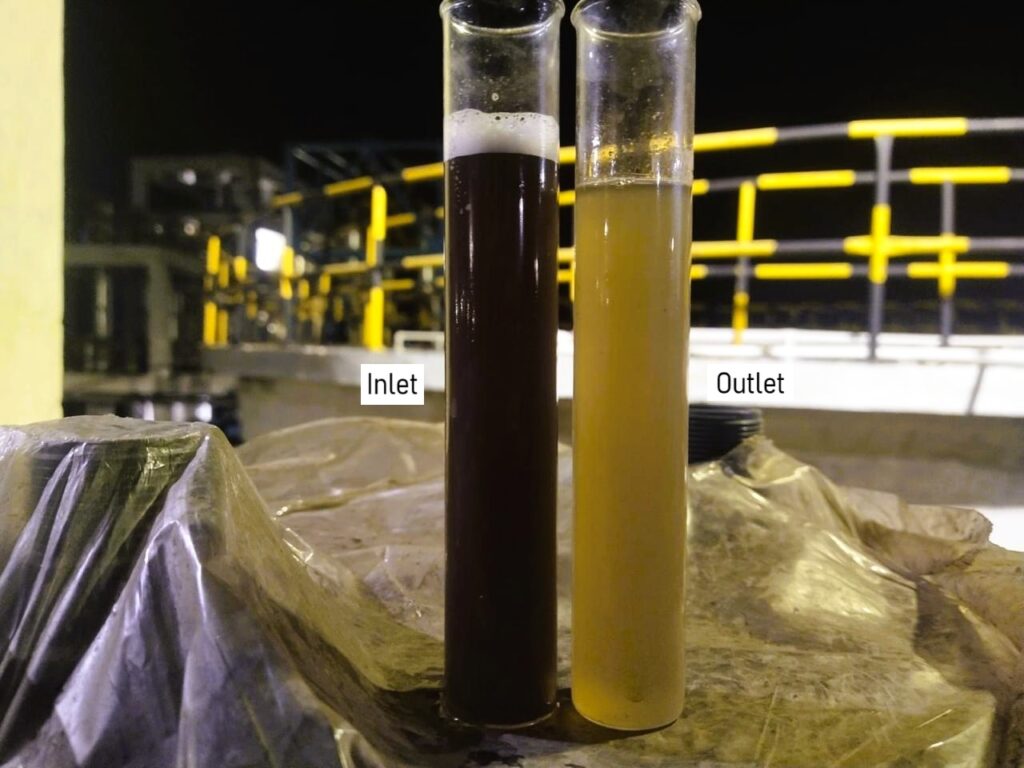
60-65%
BOD Reduction
65-70%
Color Reduction
60-70%
Retention Time
8-10 hours
Energy Usage
0.25-0.5 units/day
Optimum Retention Time
At 100% flow (1000 LPH)
8 hours
COD Reduction
64% avg
BOD Reduction
70% avg
TSS Reduction
42% avg
Color Reduction
65% avg
Process Optimization Insights
Higher COD Load
Improves system performance
MLSS Optimization
6500–8500 ppm (MLVSS/MLSS ≈ 0.6)
Critical Controls
pH (6–7.5), TDS (2000–6000 ppm), MLSS balance
Cost & Environmental Impact
Treatment Cost
₹0.14–₹0.25/m³
Very low OPEX compared to conventional methods
ROI Period
2 - 3 years
For a 300 KLD system
CO₂ Savings
234 tonnes/year
2.6 kg CO₂ saved per m³ treated
Chemical Reduction
PAC, CRP, and sludge dryer operation cut by 60–80%
Key Outcomes
Consistent Performance
COD/BOD reduction of ~60–65% with strong colour removal capabilities
Scalability Potential
BKS Textiles evaluating scale-up to 500 m³/day based on pilot success
Operational Robustness
Low energy use, durable electrodes, and minimal operator intervention required
Sustainability Achieved
Significant reduction in environmental impact with minimal chemical usage and sludge production